
My new job invited me and other employees to participate in leadership training through Academy Leadership. I’m plugging them in this post because the whole process has been very insightful in ways that other trainings have not. One of the requirements was to write a personal leadership philosophy. I’m publishing my philosophy because it has helped me to react more thoughtfully to the aftermath of the election. I strongly believe that it is necessary to know who you are and what you believe if you want to be a leader who makes a positive difference in the world.

There are three anecdotes and one bit of trivia that sum up my leadership philosophy.
- The book that probably had the greatest effect on my early ideas of leadership was the Spire Comic “Tom Landry and the Dallas Cowboys.” I picked it up when I was five in my church library. Tom declares that his priorities were God first, family second, and football third. I pretty much adopted those priorities except for the football part and have stuck to them since.
- I think it’s important to develop your beliefs, practice them, reflect on and reevaluate them, and repeat.
- With family and people in general it is important to be selfless, empathetic, trustworthy, thoughtful, and foster harmonious relationships.
- With work I value simplicity, innovation, exploration, accessibility, and personal expression.
The church I grew up in had a large effect on my development as a leader as it was the first organization I belonged to and frequently attended. It was in church that I witnessed my first examples of good and bad leadership. A good leader will create a moral code and live in a way that balances this code with how he or she treats other people and what he or she creates. A bad leader weighs too much importance on one of those values, or worse, he or she values impulsive self-interest above all other values.
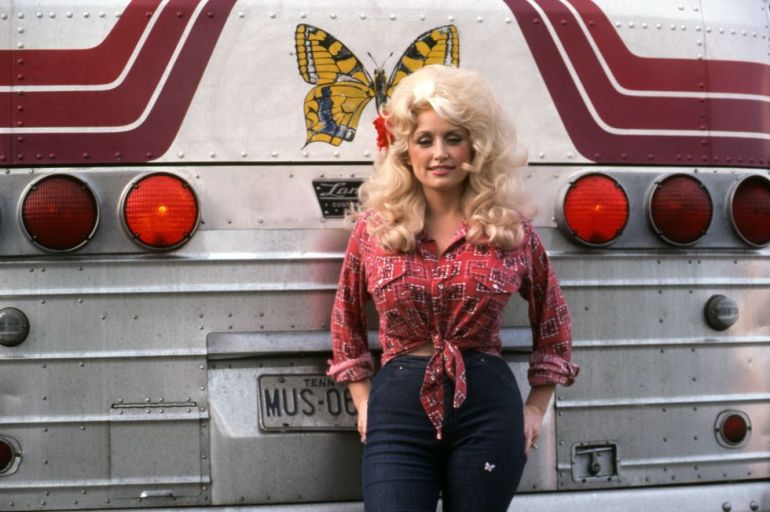
- I was a Dramatic Arts major with a playwriting emphasis at UC Santa Barbara. Theater has so many different disciplines within it and the goal of the director is make everything work together in harmony. The costuming needs to make sense with the story and the lighting. The music needs to fit with the tone of the play. Each discipline has its own leader with his or her opinions. Leaders disagree but they are honest, they share the same goal, and they want to help each other grow. Leaders set a destination and embrace the adventure of driving along a road they didn’t plan on taking. Leaders don’t ask anyone to do something they wouldn’t do, and leaders can inspire others by doing things people didn’t think they could do. My senior thesis was to write a one-act play to be produced in the black box theater on campus. I had my definite ideas about what the play was about and how certain lines should be read, but the only thing I told the director was that the script was inspired by a musical variety show I saw at Dollywood in 1996 right before Tupac died. When I watched the performance of my play, it was a humbling and satisfying experience to watch the actors interpret it better than I originally imagined. Watching this performance of my script instilled the value in me to give people a little direction and then let them surprise you with the work they present. This approach also introduces the possibility of people misinterpreting your direction or going in a direction you didn’t want to go. While the ultimate goal was to put on a good show for the audience, I think it’s also a goal in any creative endeavor to empower others with the freedom to learn from their mistakes. This also means leaders must encourage self-reflection and exploration.
- When I was a teenager I took a test to see what career I should enter. My top three results were disc jockey, priest, and politician, and my school had me shadow former Santa Barbara County Supervisor Tom Rogers. Sometimes I feel like I threw the test results in a blender and made up my own career. I like working in public service because I enjoy fostering a functional society and creating and improving ineffective or inefficient systems. There are many reasons why I sometimes get frustrated working in a large organization where some people are consumed by designated power or the illusion of power. I cannot tolerate liars, know-it-alls, people who value themselves over all others, people who value power for its own sake, and cowards. I also don’t always feel suited to working a regular job as I am twice as effective when I work in a t-shirt and jean shorts, listen to loud music, and work from 8 p.m. until 3 a.m. There is also so much to do at work, but I will spend ten minutes writing one sentence to get it perfect. I frequently have to stop myself from doing this. My other idiosyncrasy related to my junior high career result is that as a generally introverted actor, it is sometimes easier for me to talk to 100 people than it is to talk to one person.
 Lael Wageneck
This is a real good write up. Very good points. Definitely taking this to the bank. (Not sure if you’ll ever read this comment since its the first in over 2 years since 11/19/2016) Best.
Hi Joe. I’m glad you liked the write-up on my leadership philosophy. I did read this…even though it is three years later. 🙂 I update this site once a year or so. Take care, Lael.